Why Invest in a High-Speed Water Bottle Filling Machine?
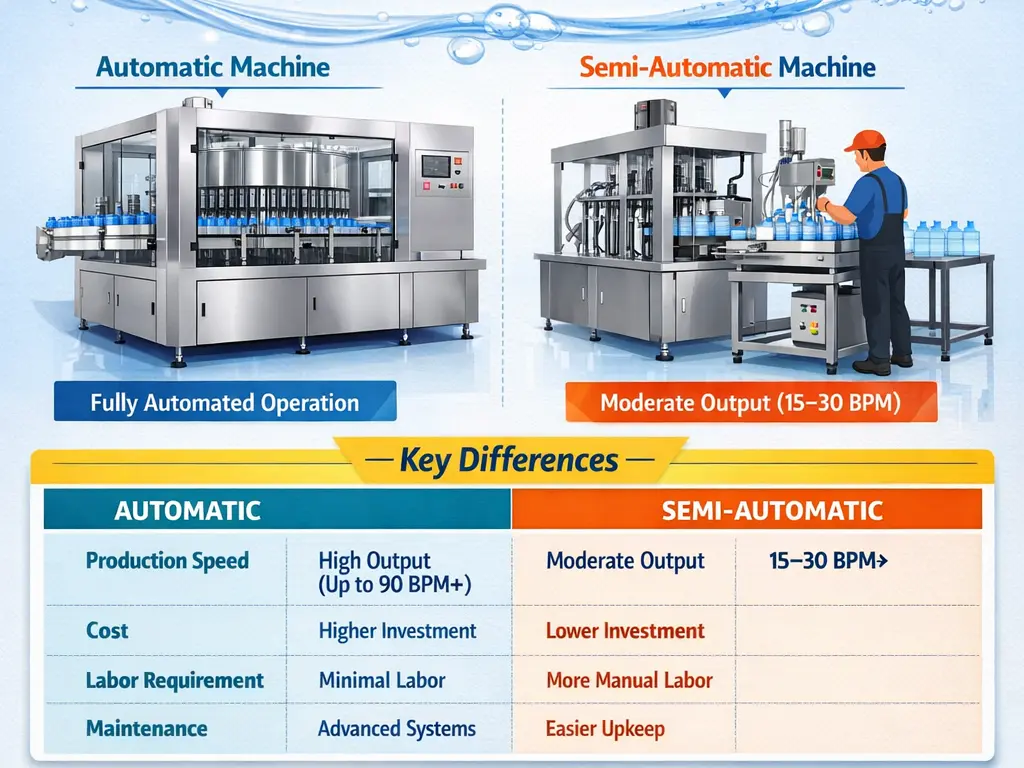
Why Invest in a High-Speed Water Bottle Filling Machine? Demand for packaged drinking water continues to rise globally, pushing bottling plants to adopt faster, more efficient, and more hygienic production systems. Today, many water bottling brands and contract packers are upgrading to a high-speed water bottle filling machine to improve their production capability, maintain product consistency, and reduce operating cost. The shift towards higher capacity systems is no longer optional — it’s becoming standard for competitive bottled water businesses. The Shift Toward High-Speed Bottling Over the last decade, the bottled water industry has evolved from manual systems to fully automated filling lines. As the market moves towards bulk distribution, FMCG-style packaging, and strict compliance standards, bottlers require equipment that can deliver: high-speed water bottle filling machine This is where a high-speed bottling line offers a major advantage. What is a High-Speed Bottle Filling Machine? A high-speed filling system is an integrated automatic bottle filling machine that washes, fills, and caps bottles at significantly higher speeds than conventional machines. It is often part of a complete bottling plant that may also include: This level of integration allows bottled water plants to run continuous production with less manual intervention. How High-Speed Filling Technology Works: bottle filler equipment Modern high-speed filling systems use: ➡ Rotary rinsing-filling-capping modules➡ PLC and HMI-based control panels➡ Servo and sensor automation➡ CIP (Clean-in-Place) sanitation systems Bottles move through each stage in synchronized motion, ensuring consistent filling volumes and reduced contamination risk. This design is commonly used in beverages because it supports high hygiene standards. Key Benefits of High-Speed Bottle Filling Machines Faster Output in Automatic Bottle Filling Machines A key reason companies invest is the jump in production speed. Typical ranges include: This boost in output makes a high-speed filling line ideal for growing brands. Reduced Labor Dependency Because production is automated, bottling plants benefit through: For many operators, labor shortages make automation a necessity. Precision Filling & Quality Control: Mineral water filling machine High-speed systems deliver accurate filling volumes using: This ensures no: underfilling (customer complaints) overfilling (profit loss) Lower Downtime & Higher Reliability Industrial-grade components reduce breakdowns and enhance uptime. Most systems feature: high-speed water bottle filling machine Downtime directly impacts production revenue, so reliability becomes an asset. Better Hygiene & Compliance: A modern packaged drinking water filling system minimizes manual touchpoints, supporting compliance for BIS, FSSAI, WHO and export markets. Hygiene is critical for both retail and institutional distribution. High-Speed Bottle Filling Machine vs Standard Filling Machines: What’s the Difference? Feature Standard Machine High-Speed Line Output Low–Medium High–Very High Labor Higher dependency Minimal Consistency Variable Highly consistent Capabilities Limited Integrated Ideal for Small units Growth-focused plants Bottling Capacity: Understanding BPM (Bottles Per Minute) Production capacity is measured in BPM (Bottles Per Minute). This helps match machine output to market demand. For example: Capacity selection depends on business goals, packaging SKUs, and plant footprint. Cost & Investment: What Businesses Should Expect The cost of high-speed filling machinery varies based on: While upfront cost is higher than semi-automatic machinery, operating cost per bottle is drastically lower due to economies of scale. How Fast Can the Investment Pay Back? Most bottled water brands recover the investment within 12 to 36 months, depending on: Automation speeds up ROI by boosting output while reducing wastage and labor. Who Should Invest in High-Speed Bottle Filling Machines? (Ideal Buyer Profiles) A high-speed filling line is suitable for: It is especially profitable for plants that face supply-demand imbalance or seasonal sales spikes. Choosing the Right High-Speed Filling Machine Supplier Before purchasing, evaluate suppliers based on: Turnkey suppliers that provide bottling plant machinery, utility setup, layout design, and compliance documentation reduce delays and technical risk. Conclusion: Why the Market is Moving Toward High-Speed Automation As bottled water consumption accelerates, speed, hygiene, and efficiency are becoming competitive differentiators. A high-speed filling line enables companies to scale production, reduce cost per bottle, ensure quality, and improve profitability. For any plant looking to expand or standardize output, investing in a high-speed water bottle filling machine is a strategic and future-ready decision. FAQs Q1: How many bottles per minute can a high-speed filling machine produce?High-speed lines typically range from 60 BPM to 200+ BPM, depending on configuration. Q2: What type of bottles do high-speed filling systems handle?Most systems handle PET water bottles. Some models support glass or beverage-grade containers. Q3: Is a high-speed filling line suitable for small bottled water businesses?It is ideal for medium and large plants. Small units usually start with 24 BPM–40 BPM lines. Q4: What is the ROI for a high-speed filling machine?Most plants recover their investment within 12–36 months, depending on production and pricing. Q5: Do high-speed machines reduce labor costs?Yes. Automation significantly reduces labor requirements and dependency on skilled operators.